A professional photographer can take a beautiful shot of your product. That doesn’t mean they understand ecommerce product photography. The two disciplines share a camera but almost nothing else — different lighting logic, different deliverable formats, different goals, and a completely different definition of success.
If you’re a brand moving products online and you’ve been treating these two things as interchangeable, that’s worth reconsidering.
What “Regular” Product Photography Is Actually For
Commercial product photography — the kind used in print ads, lookbooks, billboards, or editorial spreads — is built around impact. The image needs to stop someone mid-scroll on a magazine page or hold attention in a 10-second glance. Mood matters. Art direction matters. The product doesn’t always need to be the only thing in the frame.
A fashion brand shooting for Vogue India isn’t worrying about whether the image will load quickly on a mobile browser. A perfume brand shooting for a newspaper insert doesn’t need 8 angles of the bottle with a transparent background. The context is controlled. The viewer is passive. The job is to create desire.
That’s a genuinely different brief from ecommerce product photography services, where the viewer is an active buyer making a decision — often on a phone, often in under three seconds, often comparing your product directly against five others in adjacent tabs.
Where Ecommerce Photography Has Its Own Rules
Ecommerce product photography is engineering as much as it is aesthetics. Every image decision maps back to a conversion outcome.
White or light grey backgrounds aren’t arbitrary — they’re required by Amazon, Flipkart, and most major marketplaces for primary listing images. Shadow handling matters because poorly controlled shadows read as dirt or damage on low-resolution screens. Image dimensions and aspect ratios need to match platform specifications exactly, or the thumbnail crops awkwardly and kills the click-through rate.
There’s also the question of consistency. An ecommerce brand selling 40 SKUs needs those 40 images to look like they belong to the same family — same light direction, same crop, same tonal quality. A lifestyle editorial shoot doesn’t have that constraint. Ecommerce product photography services that work at scale understand this discipline. It’s a production workflow, not just a shoot.
The Angle Count Problem
Here’s something regular photography rarely deals with: ecommerce listings need multiple angles. Not two. Not three. Often six to eight, plus a video loop and an infographic frame.
A front shot, a three-quarter view, a back shot, a detail close-up, a size reference image, a lifestyle context shot — all shot in a consistent style, all processed to the same specification. A single-angle hero shot that wins awards in print will fail on a product detail page because it doesn’t answer the questions a buyer actually has.
Can I see the stitching? What’s the label look like? How does the size compare to something familiar? Does it come with accessories? Ecommerce product photography services are structured to answer those questions visually, which is why the brief for an ecommerce shoot is often three times longer than for an editorial one.
Lighting: The Technical Divergence
Editorial photography rewards dramatic lighting. Side lighting that creates depth. Hard shadows that suggest texture. A single strong light source that gives a product visual character.
Ecommerce product photography works almost entirely with soft, diffused, wrap-around light. The goal isn’t drama — it’s accuracy. A buyer needs to see the actual colour of the fabric, the real finish of the metal, the true translucency of the packaging. A beautifully lit editorial shot that makes a navy blazer look black is an ecommerce failure. Returns go up. Reviews mention colour discrepancy. Trust takes a hit.
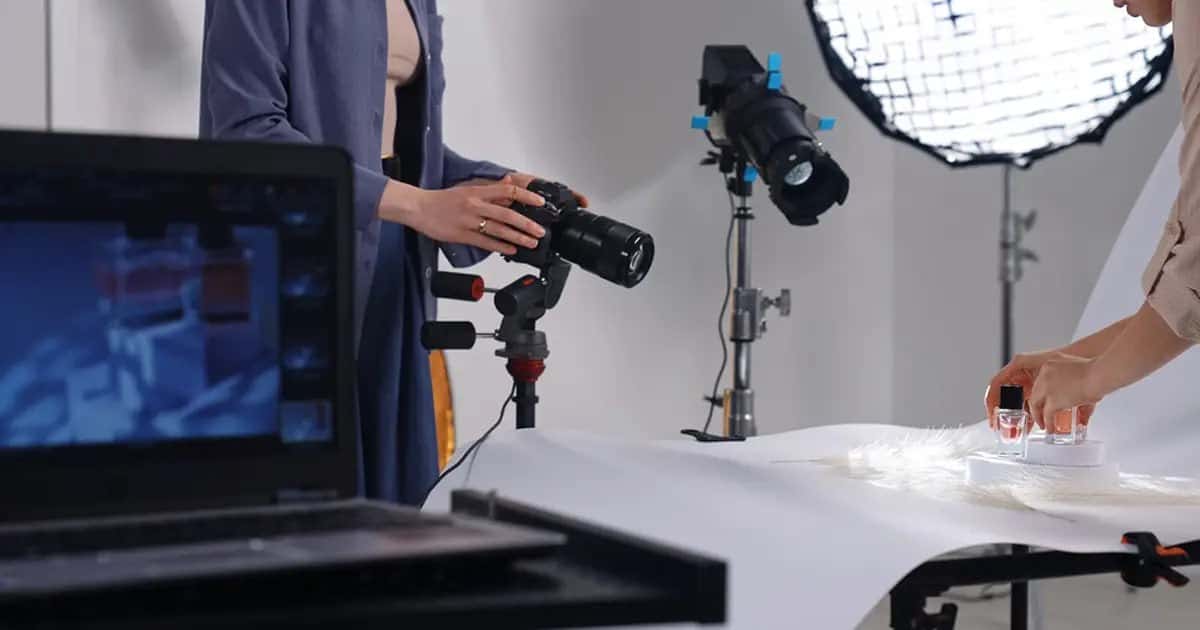
This is why experienced ecommerce product photography services invest in shooting tents, multiple light banks, and calibrated colour grading workflows rather than the kind of on-location, available-light approach that works brilliantly for editorial.
Post-Production Is a Different Language
An editorial retoucher’s job is to make an image feel polished and aspirational. An ecommerce retoucher’s job is to make an image look exactly like the product does in real life — no more, no less. Over-retouched ecommerce images create expectation gaps, which become returns, which become negative reviews.
Background removal, ghost mannequin effects for apparel, shadow creation on pure white, consistent colour correction across a batch of 60 images — this is the post-production work that dedicated ecommerce product photography services are set up for. It’s methodical, it’s scalable, and it requires a completely different skill set from editorial finishing.
Conclusion
The choice between ecommerce and regular product photography isn’t about budget or quality — it’s about purpose. Knowing which one your brand actually needs is the first decision that everything else follows.
If you’re building or refreshing an ecommerce catalogue and want to understand what a properly scoped photography brief looks like for your product category, get in touch with our team. We’ll help you figure out the right approach before a single frame is shot.